

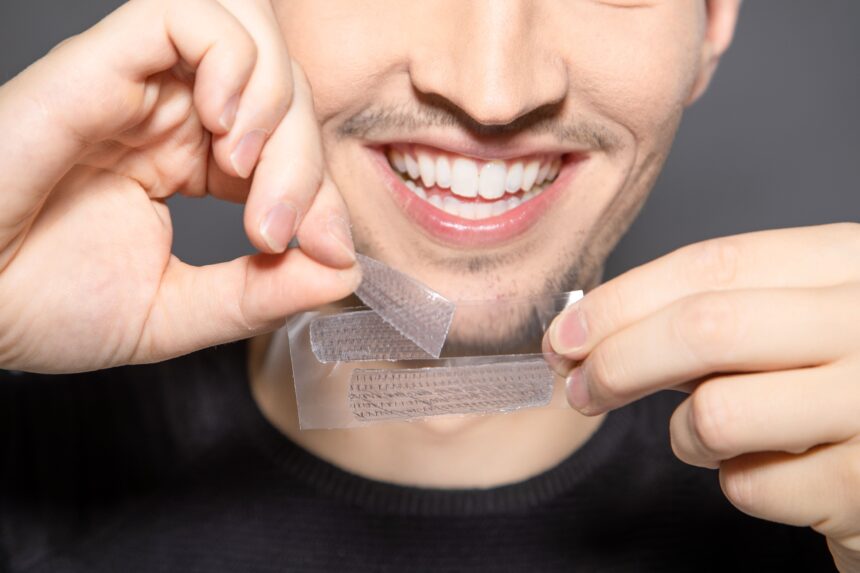
Teeth whitening strips have become a popular and affordable way to achieve a brighter smile at home. But while these products can remove certain types of tooth stains, using them incorrectly or too frequently may cause sensitivity and gum irritation.
Introduction
A bright smile is often associated with good oral hygiene and confidence. This has made teeth whitening one of the most popular cosmetic dental treatments, with many people turning to affordable products that can be used at home.
One of the most common options is teeth whitening strips. These thin, flexible strips are coated with a whitening gel and placed directly onto the surface of the teeth for a specified period.
Most whitening strips use peroxide-based ingredients, particularly hydrogen peroxide or carbamide peroxide, to break down compounds responsible for tooth discoloration.
The American Dental Association recognizes whitening strips as one of the over-the-counter options that can effectively whiten natural teeth when used appropriately.
However, whitening strips are not suitable for everyone, and using them more frequently than recommended does not necessarily produce better results.
What Are Teeth Whitening Strips?
Teeth whitening strips are thin pieces of flexible material coated with a whitening substance. The strip is placed over the teeth, allowing the active ingredient to remain in contact with the tooth surface for a specific amount of time.
Most products use hydrogen peroxide or carbamide peroxide. These substances break down colored compounds that contribute to tooth discoloration, helping the teeth appear lighter.
The strength of whitening strips varies between products, so users should always follow the instructions provided by the manufacturer.
Do Teeth Whitening Strips Really Work?
Clinical research supports the effectiveness of whitening strips in reducing tooth discoloration. However, the results depend on factors such as the type of staining, the concentration of the whitening ingredient, how long the strips are used, and how consistently they are applied.
Whitening strips are generally more effective against certain stains caused by foods, drinks, tobacco, and other lifestyle factors.
However, not every type of tooth discoloration responds equally well to whitening.
What Causes Yellow or Stained Teeth?
Some stains develop on the outside of the tooth and are known as extrinsic stains. Coffee, tea, cola, tobacco, highly pigmented foods, and poor oral hygiene can contribute to these stains.
Other discoloration occurs within the tooth itself and is known as intrinsic discoloration. This can result from ageing, certain medications, trauma to a tooth, or changes that occur during tooth development.
Whitening products can improve many types of discoloration, but some deeper or more complex stains may require professional dental treatment.
Benefits of Teeth Whitening Strips
For people who are suitable candidates, whitening strips can offer several advantages.
1. They Can Brighten Natural Teeth
Whitening strips can lighten the colour of natural teeth by breaking down stain-causing compounds.
2. They Are Convenient
Unlike professional whitening procedures that require a dental appointment, strips can be applied at home according to the product instructions.
3. They Are Usually Less Expensive
Over-the-counter whitening strips are generally more affordable than professional in-office whitening treatments.
4. They Are Easy to Use
Most products require the strip to be placed over the teeth for a specified amount of time before being removed.
5. They Can Help Remove Certain Lifestyle Stains
People who regularly consume coffee, tea, cola, or other highly pigmented foods and drinks may see improvements in some surface discoloration.
MUST READ: New Blood Pressure Guidelines
Possible Side Effects of Whitening Strips
The two most common problems associated with tooth whitening are temporary tooth sensitivity and gum irritation. The American Dental Association notes that these effects are usually mild and temporary.
Tooth Sensitivity
Some people notice increased sensitivity to cold drinks, hot foods, sweet foods, or cold air after using whitening products.
Sensitivity can occur because peroxide can penetrate the tooth structure during the whitening process. It may develop within the first few days of treatment and usually improves after the whitening treatment is stopped or completed.
Gum Irritation
Whitening gel can irritate the gums when it comes into prolonged contact with the soft tissues.
This may cause redness, burning, discomfort, or temporary irritation. Poor application or using too much whitening product can increase the risk.
Can Whitening Strips Damage Your Teeth?
Occasional whitening performed according to product instructions is generally considered safe for suitable users. However, repeatedly whitening the teeth without allowing adequate time between treatments can increase the risk of sensitivity and irritation.
The American Dental Association has also reported concerns about excessive whitening, including potential effects on enamel and gums.
Using stronger products, leaving strips on longer than recommended, or combining several whitening treatments at the same time does not necessarily produce better results and may increase the risk of side effects.
Who Should Be Careful With Whitening Strips?
People with untreated cavities, active dental infections, significant gum disease, exposed tooth roots, or existing severe tooth sensitivity should speak with a dentist before using whitening products.
A dental examination can help identify the cause of tooth discoloration and determine whether whitening is appropriate.
Children and teenagers should also not use cosmetic whitening products without appropriate professional advice. The American Dental Association notes that cosmetic bleaching is discouraged for children and adolescents with primary or mixed dentition.
Whitening Strips Do Not Whiten Dental Restorations
Whitening products work on natural teeth. They do not whiten tooth-coloured fillings, crowns, veneers, bridges, or implants in the same way.
If you have dental restorations that match the current colour of your teeth, whitening your natural teeth could make the restorations appear darker by comparison.
The American Dental Association recommends considering existing restorations when planning tooth whitening.
How to Use Whitening Strips Safely
Proper use can help reduce the risk of unnecessary sensitivity and irritation.
1. Follow the Instructions
Use the strips exactly as directed by the manufacturer. Do not leave them on for longer than recommended.
2. Do Not Use Them More Frequently Than Recommended
Using whitening strips repeatedly in an attempt to achieve faster results can increase the risk of tooth sensitivity and gum irritation.
3. Do Not Apply Them to Damaged Teeth
If you have cavities, broken teeth, severe sensitivity, or painful gums, speak with a dentist before whitening.
4. Avoid Combining Multiple Whitening Products
Using whitening strips together with strong whitening gels, professional bleaching products, or other aggressive whitening methods without professional guidance may increase irritation and sensitivity.
5. Stop If You Experience Significant Pain
Mild temporary sensitivity can occur, but severe or persistent pain should not be ignored. Stop using the product and speak with a dental professional.
6. Maintain Good Oral Hygiene
Whitening does not replace brushing, flossing, and regular dental care. Brush your teeth twice daily with fluoride toothpaste and clean between your teeth regularly.
How Can You Keep Your Teeth White Naturally?
Reduce frequent consumption of strongly staining drinks such as coffee, tea, cola, and other dark beverages. Avoid tobacco products, maintain good oral hygiene, and visit your dentist regularly.
Drinking water after meals and drinks can also help reduce the amount of staining material that remains on the teeth.
Most importantly, remember that naturally healthy teeth do not have to be extremely white. Tooth colour varies naturally from person to person.
Teeth Whitening Strips vs Professional Whitening
Over-the-counter strips generally contain lower concentrations of whitening agents than professional treatments. This means they may require more time to produce noticeable results.
Professional whitening is performed under the supervision of a dental professional and can use stronger whitening agents. A dentist can also examine the teeth and gums before treatment and address problems that could make whitening uncomfortable or inappropriate.
For someone with healthy teeth who wants a gradual improvement, whitening strips may be a convenient option. Someone with significant discoloration, dental restorations, sensitivity, or underlying dental problems may benefit from professional advice first.
Final Thoughts
Teeth whitening strips can be an effective and convenient way to brighten natural teeth when they are used correctly. Products containing hydrogen peroxide or carbamide peroxide can reduce certain types of tooth discoloration, and clinical evidence supports the effectiveness of whitening strips.
However, whitening does not mean that more is better. Excessive or improper use can lead to tooth sensitivity, gum irritation, and other dental problems. People with cavities, gum problems, severe sensitivity, or dental restorations should consider speaking with a dentist before starting treatment.