

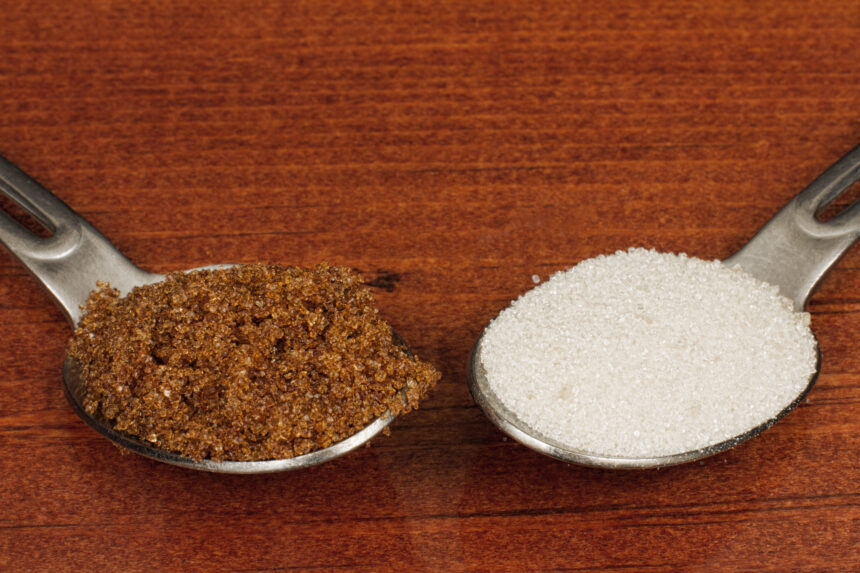
Brown sugar is often marketed as a healthier and more natural alternative to white sugar. Its darker colour can make it appear more nutritious, but the difference between the two is much smaller than many people believe.
Introduction
Sugar is a common part of many diets. It can be found naturally in foods such as fruits and milk, but it is also added to foods and drinks to improve their taste.
When choosing sugar, many people assume that brown sugar is the healthier option because it looks less processed than white sugar.
Brown sugar does contain slightly more minerals than white sugar, but the amounts are very small. In terms of calories, carbohydrates, and the way the body handles them, the two are remarkably similar.
The bigger issue for health is usually how much added sugar you consume, rather than whether the sugar in your kitchen is brown or white.
What Is Brown Sugar?
Brown sugar gets its characteristic colour, flavour, and softer texture from molasses. Depending on the type, brown sugar can be produced by retaining some of the molasses during processing or by adding molasses back to refined white sugar.
The molasses gives brown sugar small amounts of minerals such as calcium, potassium, iron, and magnesium.
However, the quantity consumed is generally too small for brown sugar to be considered an important source of these nutrients.
What Is White Sugar?
White table sugar is primarily sucrose, a carbohydrate made from glucose and fructose.
During processing, impurities and molasses are removed, producing the familiar white crystals used in cooking, baking, and sweetening drinks.
White sugar provides calories but very little nutritional value beyond energy.
Is Brown Sugar Healthier Than White Sugar?
Brown sugar and white sugar are both forms of added sugar and should be consumed in moderation.
Brown sugar may contain slightly more minerals because of its molasses content, but this does not make it a significant nutritional source of those minerals.
The differences in calories and carbohydrates are also relatively small.
Therefore, replacing white sugar with brown sugar does not automatically make a diet healthier.
If someone adds several teaspoons of brown sugar to tea or coffee every day, switching to the same amount of white sugar does not create a major difference in overall health.
5 Things to Know About Brown Sugar and White Sugar
The colour of sugar can be misleading. Here are the important facts to remember.
1. Brown Sugar Is Not a Major Source of Vitamins and Minerals
Brown sugar contains trace amounts of minerals from molasses, but the amounts are small.
You would need to consume considerably more sugar to obtain meaningful amounts of these nutrients, which would also mean consuming excessive amounts of added sugar.
It is much better to obtain minerals from nutritious foods such as vegetables, fruits, beans, nuts, seeds, whole grains, fish, eggs, and other nutrient-rich foods.
2. Both Contain Added Sugar
Whether the sugar is brown, white, raw, or another type, it still contributes added sugars to your diet when used in foods and drinks.
The World Health Organization recommends reducing free sugar intake to less than 10 percent of total energy intake, with further benefits possible when intake is reduced to below 5 percent.
For someone eating 2,000 calories a day, 10 percent is about 50 grams, or approximately 12 teaspoons, of free sugar from all sources.
This includes sugar added to foods and drinks as well as sugars naturally present in honey, syrups, and fruit juices.
3. Brown Sugar Still Affects Blood Glucose
Both brown and white sugar contain sucrose.
When consumed, sucrose is broken down into glucose and fructose. The glucose contributes to an increase in blood sugar.
This means brown sugar should not be considered a sugar that is safe to consume freely simply because it is darker in colour.
People with diabetes or those at risk of developing diabetes should pay attention to their overall carbohydrate and added sugar intake rather than assuming that brown sugar is a healthier substitute.
4. Brown Sugar Is Not a Weight-Loss Food
Brown sugar is sometimes promoted as a better choice for people trying to lose weight.
However, simply replacing white sugar with brown sugar is unlikely to produce meaningful weight loss.
Both provide calories, and consuming large quantities of either can contribute to excess calorie intake.
For weight management, the overall eating pattern matters much more than the colour of the sugar.
Reducing the amount of added sugar in beverages, desserts, snacks, and other foods is generally more useful than simply changing from white sugar to brown sugar.
5. The Biggest Difference May Be Taste
Brown sugar has a deeper, slightly caramel-like flavour because of the presence of molasses.
This makes it useful in certain recipes where its flavour and moisture are desirable.
White sugar has a more neutral taste and is commonly used when a recipe requires sweetness without the additional flavour of molasses.
Therefore, the choice between the two can often come down to taste, texture, and the recipe rather than health.
MUST READ: Why You Feel Hungry Shortly After Eating
What About Raw Sugar?
Terms such as “raw,” “natural,” and “unrefined” can create the impression that a sugar product is significantly more nutritious.
Some less-refined sugars may retain small amounts of molasses and minerals, but they are still concentrated sources of sugar.
A natural source does not automatically mean that a food should be consumed in large quantities.
The same principle applies to honey and syrups. Although they may contain small amounts of other compounds or nutrients, they still contribute free sugars to the diet.
How Much Sugar Should You Eat?
The goal is not necessarily to eliminate all sugar, but to keep added and free sugars under control.
The American Heart Association recommends limiting added sugar to no more than 6 teaspoons per day for most women and 9 teaspoons per day for most men. Children generally need even less added sugar.
It is important to remember that sugar can come from many sources throughout the day. A person may add sugar to tea in the morning, drink a sweetened beverage at lunch, eat biscuits during the afternoon, and have a sweet dessert later. The total amount can add up quickly.
How Can You Reduce Your Sugar Intake?
Small changes can make it easier to reduce added sugar without feeling deprived.
Drink More Unsweetened Beverages
Gradually reducing the amount of sugar added to tea, coffee, pap, and other drinks can significantly reduce daily sugar intake. Water is an excellent everyday choice.
Choose Whole Fruits More Often
Whole fruits contain natural sugars but also provide fiber, vitamins, minerals, and other beneficial compounds.
Fruit juice, even without added sugar, can contain substantial amounts of naturally occurring sugar and provides less fiber than whole fruit.
Check Food Labels
Sugar can appear in many packaged foods that do not necessarily taste extremely sweet.
Checking nutrition labels can help you identify how much added sugar you are consuming.
Reduce Sugary Snacks
Biscuits, cakes, sweets, pastries, and other desserts can contribute significant amounts of added sugar.
Enjoying them occasionally and in reasonable portions can help keep overall intake under control.
Reduce Sugar Gradually
If you are accustomed to very sweet foods and drinks, suddenly removing all sugar may make your diet difficult to maintain.
Reducing the amount gradually can allow your taste buds to adjust.
Is Brown Sugar Better for People With Diabetes?
Brown sugar should not be considered a diabetes-friendly sugar.
Because brown sugar and white sugar are both primarily sucrose, switching between them does not eliminate the effect of sugar on blood glucose.
People with diabetes should follow an individualized eating plan recommended by their healthcare professional or registered dietitian.
The focus should be on the overall carbohydrate content and nutritional quality of meals rather than relying on brown sugar as a healthier substitute.
What Should You Use Instead?
The healthiest approach may not be finding a “better” sugar, but reducing how much added sugar you need.
If you enjoy sweetened tea or coffee, try gradually reducing the amount of sugar.
For meals and snacks, choose naturally sweet foods such as whole fruits more often.
When baking, you may sometimes be able to reduce the amount of sugar called for in a recipe without significantly affecting the result, although this depends on the recipe.
The important point is that replacing white sugar with another type of sugar does not remove the need for moderation.
Final Thoughts
So, is brown sugar really healthier than white sugar? The short answer is not in any meaningful nutritional sense. Brown sugar contains small amounts of minerals from molasses, but these amounts are not enough to make it a significant source of nutrition. Both brown and white sugar are concentrated sources of sugar, and consuming too much added sugar can contribute to excessive calorie intake and increase the risk of health problems.
If you prefer brown sugar because you enjoy its flavour, there is nothing inherently wrong with using it in moderation. However, choosing brown sugar should not create the impression that you can consume more of it because it is “healthy.”