

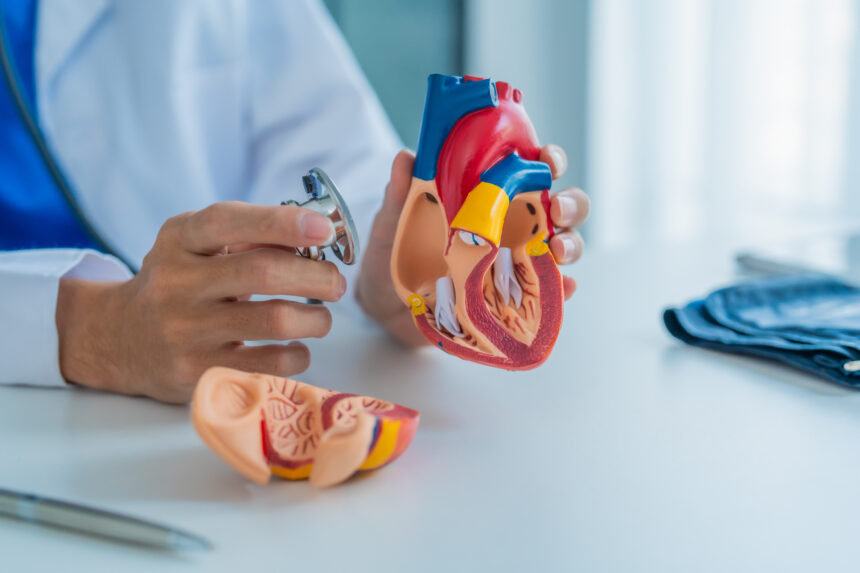
Heart valve problems can develop gradually, sometimes without noticeable symptoms in the early stages. However, unexplained breathlessness, chest discomfort, dizziness, unusual tiredness and swollen ankles may indicate that one or more of the heart valves are not working properly.
Introduction
The heart is responsible for pumping blood throughout the body, delivering oxygen and nutrients to different organs and tissues. To perform this function effectively, it relies on four valves that control the direction of blood flow.
These valves open and close with every heartbeat, ensuring that blood moves in the right direction. However, when one or more valves become damaged, narrowed or unable to close properly, the heart may struggle to pump blood efficiently.
This is known as heart valve disease or valvular heart disease.
Some people with mild heart valve problems may not experience symptoms for years. Others may gradually develop symptoms that interfere with everyday activities, such as walking, climbing stairs or lying down to sleep.
Understanding the early warning signs is important because untreated, significant valve disease can eventually lead to complications such as heart failure, abnormal heart rhythms and blood clots.
What Are Heart Valves and How Do They Work?
The human heart has four main valves:
- Aortic valve: Controls blood flow from the left ventricle into the aorta, which carries blood to the rest of the body.
- Mitral valve: Controls blood flow between the left atrium and the left ventricle.
- Pulmonary valve: Controls blood flow from the right ventricle to the lungs.
- Tricuspid valve: Controls blood flow between the right atrium and the right ventricle.
Each valve must open properly to allow blood to pass and close tightly to prevent blood from flowing backwards.
When a valve does not function correctly, the heart may have to work harder to maintain normal circulation.
What Are the Main Types of Heart Valve Problems?
Heart valve disease generally occurs in three main forms.
1. Valve Stenosis
Stenosis happens when a heart valve becomes narrowed or stiff, making it difficult for blood to pass through.
The heart must work harder to push blood through the narrowed opening. Over time, this additional effort can weaken or enlarge parts of the heart.
2. Valve Regurgitation
Regurgitation occurs when a heart valve does not close tightly, allowing some blood to flow backwards.
This backward movement reduces the efficiency of the heart’s pumping action and may place additional strain on the heart.
3. Valve Prolapse
Prolapse occurs when the flaps of a valve bulge backwards instead of closing properly. It is commonly associated with the mitral valve.
Some people with mitral valve prolapse do not experience significant symptoms or complications, while others may develop valve leakage.
MUST READ: 7 Healthy Nigerian Breakfast Ideas for Busy Mornings
8 Early Signs of Heart Valve Problems You Should Not Ignore
Heart valve disease does not always produce obvious symptoms at the beginning. However, as the condition progresses, certain changes may become noticeable.
1. Shortness of Breath
One of the common symptoms of significant heart valve disease is breathlessness. You may notice that you become unusually short of breath while walking, climbing stairs, exercising or performing activities that previously felt easy.
This can happen when a damaged valve affects the heart’s ability to move blood efficiently. In some cases, pressure may build up in the blood vessels of the lungs, causing fluid to accumulate.
As the condition progresses, breathlessness may also occur while resting or lying flat. Persistent or unexplained shortness of breath should be medically assessed, especially when it is accompanied by chest discomfort or unusual tiredness.
2. Unusual Tiredness and Weakness
Feeling exhausted after ordinary activities may sometimes be associated with heart valve problems.
When the heart cannot pump blood efficiently, the muscles and other body tissues may receive less oxygen-rich blood than they need, particularly during physical activity.
You may find yourself getting tired more quickly when walking, doing household chores or climbing stairs.
Although tiredness has many possible causes, persistent fatigue accompanied by breathlessness, dizziness or reduced exercise tolerance deserves medical attention.
3. Chest Pain or Discomfort
Some people with heart valve disease experience chest pain, pressure or tightness. This may occur when the heart muscle does not receive enough oxygen-rich blood to meet its needs.
It can happen particularly in people with aortic stenosis, although chest pain is not limited to this condition.
The discomfort may become noticeable during physical activity and sometimes improve with rest.
Important: Chest pain should never automatically be attributed to heart valve disease. It may also indicate a heart attack or another serious condition. Seek emergency medical attention if chest pain is sudden, severe, persistent or accompanied by sweating, nausea, breathlessness or pain spreading to the arm, jaw or back.
4. Dizziness or Fainting
Heart valve problems can sometimes affect the amount of blood reaching the brain. When the heart cannot maintain adequate blood flow, a person may experience dizziness, light-headedness or fainting.
This is particularly concerning in people with severe aortic stenosis, where the narrowed valve restricts blood leaving the heart.
Fainting during physical activity should always be taken seriously and requires prompt medical assessment.
5. Swelling in the Feet, Ankles or Legs
Swelling in the lower parts of the body can occur when heart valve disease affects the heart’s ability to maintain normal circulation.
When the heart struggles to pump blood effectively, pressure may build up in the veins, allowing fluid to collect in surrounding tissues.
You may notice that your shoes feel tighter, your ankles appear swollen or your legs become heavier than usual.
Although swollen feet and ankles can result from prolonged sitting, medication effects, kidney problems and other conditions, persistent swelling accompanied by breathlessness or fatigue needs medical evaluation.
6. Irregular or Racing Heartbeat
Some people with heart valve problems experience palpitations, which are sensations of the heart beating unusually fast, strongly or irregularly.
This can happen because valve disease may cause changes in the size or pressure of the heart’s chambers, affecting the heart’s electrical system.
Conditions involving the mitral valve, for example, may be associated with abnormal heart rhythms such as atrial fibrillation.
You may notice fluttering in your chest, skipped beats or a racing heartbeat even when you are not exercising.
Frequent palpitations, particularly when accompanied by dizziness, chest pain or breathlessness, should be assessed by a healthcare professional.
7. Difficulty Sleeping Flat
Some people with more advanced heart valve disease find it difficult to breathe comfortably when lying flat.
This symptom is known as orthopnoea. It may occur when fluid builds up in the lungs because of increased pressure associated with heart dysfunction.
You may find yourself sleeping with several pillows or needing to sit upright to breathe comfortably.
Another related symptom is waking up suddenly at night feeling breathless. This is known as paroxysmal nocturnal dyspnoea.
These symptoms can indicate significant heart or lung problems and should not be ignored.
8. Persistent Cough or Unexplained Breathing Problems
A persistent cough can sometimes occur when heart valve disease leads to increased pressure in the blood vessels of the lungs or fluid accumulation.
The cough may become worse when lying down or at night. In some cases, a person may experience wheezing or produce frothy sputum.
However, coughing is much more commonly caused by respiratory infections, asthma, allergies and other lung conditions.
If a persistent cough occurs alongside breathlessness, swollen ankles or difficulty lying flat, a medical assessment is important.
What Causes Heart Valve Problems?
Heart valve disease can develop for different reasons. Some people are born with abnormal heart valves, while others develop problems later in life.
Common causes include:
1. Ageing
As people grow older, heart valves may become thickened, stiff or calcified. Calcium deposits can gradually restrict their movement, particularly in the aortic valve.
2. Rheumatic Heart Disease
Rheumatic heart disease can develop after rheumatic fever, which may follow an untreated or inadequately treated streptococcal throat infection.
The resulting inflammation can permanently damage heart valves, particularly the mitral valve.
This remains an important cause of heart valve disease in many low- and middle-income countries.
3. Congenital Heart Conditions
Some people are born with heart valves that have an unusual structure. For example, a bicuspid aortic valve has two leaflets instead of the usual three. This can increase the risk of valve narrowing or leakage later in life.
4. Infective Endocarditis
This is an infection involving the inner lining of the heart, which can also damage its valves. It may cause fever, chills, fatigue and other symptoms. Without appropriate treatment, it can lead to serious complications.
5. High Blood Pressure and Other Heart Conditions
Long-standing high blood pressure can place additional strain on the heart and contribute to changes that affect valve function.
Other heart conditions, including heart muscle disease and previous heart attacks, may also affect how certain valves operate.
Who Is at Risk of Developing Heart Valve Disease?
Although anyone can develop heart valve problems, certain factors may increase the risk. These include:
- Older age.
- A history of rheumatic fever.
- Previous infective endocarditis.
- Congenital heart defects.
- Previous heart attack or other heart disease.
- Long-standing high blood pressure.
- A family history of certain valve conditions.
Having one or more risk factors does not mean that you will develop heart valve disease, but it may make regular medical assessment more important.
How Are Heart Valve Problems Diagnosed?
A doctor may suspect heart valve disease after reviewing your symptoms, medical history and physical examination.
One common finding is a heart murmur, which is an unusual sound caused by turbulent blood flow through the heart.
However, not every murmur indicates serious valve disease, and some people with valve problems may not have an obvious murmur. The following tests may be used to investigate the condition:
1. Echocardiogram
An echocardiogram is an ultrasound scan of the heart. It is one of the most important tests for diagnosing heart valve disease.
It allows doctors to examine the valves, assess how well they open and close, and determine whether blood is flowing backwards or through a narrowed opening.
2. Electrocardiogram (ECG)
An ECG records the electrical activity of the heart. It can help identify abnormal heart rhythms and other signs that may require further investigation.
3. Chest X-ray
A chest X-ray may help doctors assess the size of the heart and look for signs of fluid accumulation in the lungs.
4. Cardiac MRI or CT Scan
These imaging tests may be recommended when additional information about the heart’s structure, valves or surrounding blood vessels is needed.
5. Cardiac Stress Testing
In selected patients, a stress test may help doctors understand how the heart responds to physical activity and whether symptoms develop during exertion.
Can Heart Valve Problems Be Treated?
Yes. Treatment depends on the type of valve problem, its severity, the symptoms involved and the person’s overall health.
Some people with mild valve disease do not need immediate treatment. Instead, their condition is monitored through regular medical appointments and echocardiograms.
Other treatment options may include:
Medication: Medicines may be prescribed to manage symptoms, control blood pressure, treat abnormal heart rhythms or reduce fluid accumulation. However, medication does not usually correct a severely damaged or narrowed valve.
Valve repair: In some cases, doctors can repair the damaged valve while preserving the patient’s original valve tissue.
Valve replacement: When a valve is severely damaged, it may need to be replaced with an artificial valve. Depending on the patient’s condition, this may involve open-heart surgery or a less invasive catheter-based procedure.
Early diagnosis can help doctors determine the most appropriate treatment before serious complications develop.
When Should You Seek Medical Attention?
Do not ignore persistent symptoms that may suggest a heart valve problem.
Arrange a medical assessment if you experience unexplained breathlessness, unusual fatigue, recurring dizziness, palpitations, swollen ankles or a noticeable reduction in your ability to exercise.
Seek emergency medical care if you experience:
- Sudden or severe chest pain.
- Severe difficulty breathing.
- Fainting or sudden loss of consciousness.
- Sudden weakness, facial drooping or difficulty speaking, which may indicate a stroke.
These symptoms can indicate serious medical emergencies and should not be managed at home.
Final Thoughts
Heart valve problems can develop gradually, and some people may live with mild disease for years without experiencing noticeable symptoms.
However, unexplained breathlessness, persistent tiredness, chest discomfort, dizziness, irregular heartbeat and swelling in the legs can sometimes indicate that the heart is not functioning as effectively as it should. Although these symptoms can also result from other medical conditions, they deserve proper attention, particularly when they persist or become worse.
The good news is that many heart valve conditions can be monitored and treated. Recognising unusual changes early, seeking medical assessment and following recommended treatment can help protect heart function and reduce the risk of complications.