

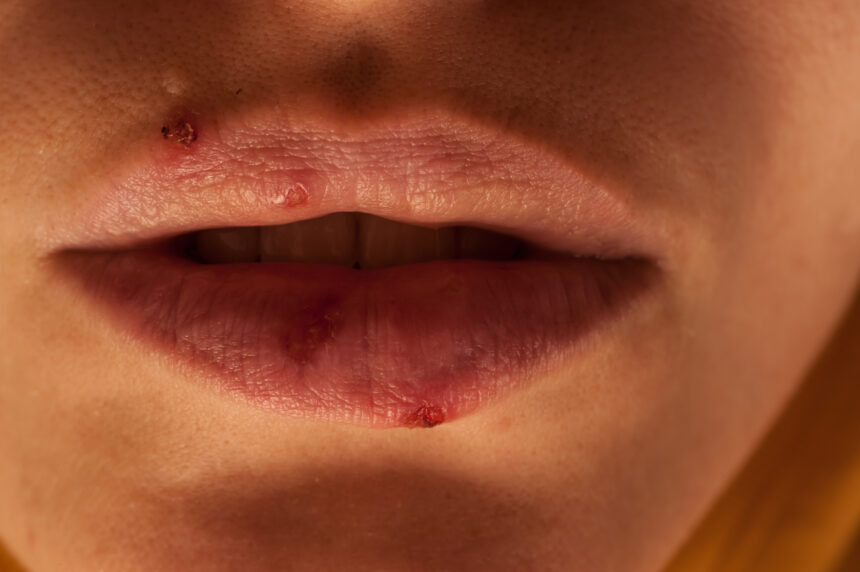
A kiss can sometimes transmit herpes simplex virus, especially when a person has an active cold sore. Not every blister or sore around the mouth is caused by malaria, so understanding how HSV spreads and knowing when to get tested can help prevent transmission and unnecessary treatment.
Introduction
A painful blister around the mouth can be easy to ignore or mistake for another condition. Some people may simply call it a fever blister, while others may assume that any fever, mouth sore or blister is related to malaria.
However, herpes simplex virus (HSV) is one possible cause of painful blisters around the mouth and lips.
HSV is a common viral infection. There are two main types: HSV-1 and HSV-2. HSV-1 commonly causes oral herpes, including cold sores around the lips and mouth, although it can also cause genital infection. HSV-2 is more commonly associated with genital herpes but can also infect the mouth.
One important thing to understand is that a person can transmit HSV even when there are no obvious sores, although the risk is generally higher when an active lesion is present.
What Is Herpes Simplex Virus?
Herpes simplex virus is a contagious virus that can infect the skin and mucous membranes.
After the initial infection, the virus remains in the body and can become inactive for periods of time. It can reactivate later and cause another outbreak.
Oral herpes commonly produces clusters of small, painful, fluid-filled blisters around the lips or mouth. These blisters may break, form sores and eventually crust over as they heal.
Some people have very mild symptoms or no noticeable symptoms at all.
How Is HSV Transmitted?
HSV is mainly spread through direct contact with infected skin, sores or bodily secretions.
1. Kissing
Kissing someone who has an active cold sore can transmit oral HSV. The risk is particularly important when there are visible blisters or sores around the lips or mouth.
This is why it is better to avoid kissing when someone has an active cold sore until the lesions have completely healed.
2. Oral Sex
HSV can also be transmitted through oral sex. Someone with oral herpes can transmit HSV-1 to a partner’s genital area through oral-genital contact. Likewise, a person with genital herpes can potentially transmit HSV to a partner’s mouth through oral sex.
Because transmission can occur even when sores are not visible, protection and communication between sexual partners are important.
3. Direct Contact With Sores
Touching an active herpes sore and then touching another person’s skin or mucous membranes can potentially spread the virus.
People with active lesions should therefore avoid unnecessary contact with the sores and should wash their hands thoroughly after touching the affected area.
4. Childhood Contact
Many people acquire HSV-1 during childhood. It can spread through close contact with an infected person, particularly when that person has an active oral lesion.
A child may therefore acquire the virus without understanding how transmission occurred.
MUST READ: Vitamin B12: Who May Be at Risk of Deficiency?
What About Sharing Cups, Spoons and Towels?
This requires some clarification. HSV is primarily transmitted through direct contact with infected skin, sores or bodily fluids, rather than simply because two people used the same household object.
However, sharing items that have recently come into contact with an active cold sore or saliva may create a potential route of transmission, particularly during an outbreak.
It is therefore sensible not to share items such as lip balm, utensils or drinking containers with someone who has an active cold sore.
Good hand hygiene is also important.
What Do HSV Sores Look Like?
Oral herpes often begins with sensations such as tingling, itching, burning or tenderness around the affected area.
Small fluid-filled blisters may then appear, often in clusters. The blisters can break and become painful sores before eventually healing.
Some people may experience fever, swollen glands, sore throat or general discomfort during their first infection, while others may have few or no symptoms. Not every mouth blister has the same appearance, however.
Not Every Mouth Blister Is Herpes
This is an important point. A blister, ulcer or sore around the mouth does not automatically mean that a person has herpes.
Mouth lesions can have many causes, including canker sores, irritation, allergic reactions, other infections and physical injury.
Some conditions can look similar, particularly during the early stages. A healthcare professional can help determine the likely cause when the diagnosis is uncertain.
Is It Malaria?
A mouth blister should not automatically be described as a symptom of malaria. Malaria is caused by Plasmodium parasites transmitted through the bites of infected mosquitoes. Its common symptoms include fever, chills, headache, sweating and weakness, although symptoms can vary.
A person who has fever alongside a mouth sore may have two different conditions, or the symptoms may have another explanation.
Rather than assuming that every fever or blister is malaria, appropriate testing and medical evaluation can help identify the actual cause.
Can You Have HSV Without Symptoms?
Yes.
Some people who have HSV do not develop noticeable symptoms, while others may have occasional outbreaks.
The virus can sometimes be transmitted when there are no visible sores. This is known as asymptomatic shedding.
Therefore, the absence of a visible cold sore does not guarantee that transmission cannot occur.
What Can Trigger a Herpes Outbreak?
After infection, HSV remains in the body and can reactivate. Possible triggers include:
- Illness or fever
- Physical or emotional stress
- Fatigue
- Sun exposure
- Hormonal changes
- Skin irritation or injury
- A weakened immune system
Not everyone has the same triggers, and some people may experience outbreaks without identifying an obvious trigger.
What Should You Do If You Have a Cold Sore?
If you develop a suspected cold sore, avoid kissing and oral sex until the lesion has completely healed.
Avoid touching the sore unnecessarily, and wash your hands if you do touch the affected area.
Do not share lip balm, drinking containers or other items that may come into contact with the lesion.
If outbreaks are frequent, severe or particularly painful, speak with a healthcare professional. Antiviral medicines may be prescribed in some situations to shorten outbreaks or reduce their frequency.
Can Herpes Be Cured?
There is currently no treatment that removes HSV from the body completely. However, antiviral medicines can help manage the infection.
Depending on the situation, treatment may help shorten an outbreak, reduce the severity of symptoms and reduce the frequency of recurrent outbreaks.
People with frequent outbreaks may be offered suppressive antiviral treatment by a healthcare professional.
When Should You See a Healthcare Professional?
Seek medical advice if:
- You have painful or unusual blisters around your mouth or genitals.
- You are not sure whether a lesion is herpes.
- The sores are severe or keep returning.
- You develop eye pain, redness or sores near the eye.
- You have a weakened immune system and develop suspected herpes.
- You have symptoms following sexual contact with someone who has herpes.
- You have a fever or other symptoms that are not improving.
Eye symptoms require particular attention because HSV can affect the eye and potentially cause serious complications.
How Can You Reduce the Risk of Spreading HSV?
If you have an active cold sore, simple precautions can reduce the chance of passing the virus to someone else.
Avoid kissing and oral sex while sores are present. Do not pick or squeeze the blisters, and wash your hands regularly.
If you experience genital herpes, discuss safer-sex practices with your healthcare professional or sexual partner.
People who experience frequent outbreaks can also discuss antiviral treatment with a healthcare professional.
Final Thoughts
A cold sore is not something that should be ignored or casually assumed to be malaria. Herpes simplex virus can spread through close contact, including kissing and oral sex, and a person can sometimes transmit the virus even when there are no obvious sores.
If you notice unexplained blisters or sores around your mouth or genitals, do not self-diagnose. Get appropriate medical advice and testing when necessary.
And if someone has an active cold sore, it is simple: avoid kissing the sore and avoid oral contact until it has healed. A little caution can help prevent passing the virus to someone else.